




In today’s dynamic educational landscape, career guidance has become more vital than ever. With countless career options available, making the right choice is challenging—and for students, the earlier you start thinking clearly about your future, the better your outcomes. As an educator and lifelong learner, I am passionate about providing clear, actionable, and intuitive advice so you can confidently shape your career path.
1. Self-Assessment: Know Yourself First
Why it matters:
Each student’s interests, skills, and temperament are unique. Self-assessment, through career aptitude tests or reflective writing, helps you discover your passions and talents. When you truly know your strengths and areas for growth, career choice becomes a process of self-discovery, not guesswork.
My tip:
Pause and ask yourself: What genuinely excites me? Is it medicine, engineering, law, arts, or something unconventional? Write down your interests and skills, and use online tests to get an objective perspective.
2. Thorough Research: Be Curious and Explore
Why it matters:
The world of work is evolving fast. Jobs that did not exist a decade ago are now robust career options. So, explore all possibilities before making a decision.
How to research:
- Use portals like LinkedIn for career insights
- Talk to professionals, family, and your school community
- Follow trends, new-age careers, and upcoming sectors
3. Networking: Build Meaningful Connections
Why it matters:
Networking with educators, seniors, and professionals provides exposure, inspiration, and sometimes a helping hand. Relationships open doors to internships and career opportunities.
How to network:
- Engage in school/college events
- Join hobby-based or academic clubs
- Use platforms like LinkedIn, X (Twitter), and Facebook wisely
4. SMART Goal Setting: Make Your Objectives Clear
My style:
I follow the ‘SMART’ principle:
- Specific: Define clear and concrete goals
- Measurable: Create checkpoints for progress
- Achievable: Be realistic
- Relevant: Align with your interests and market needs
- Time-bound: Set deadlines for each step
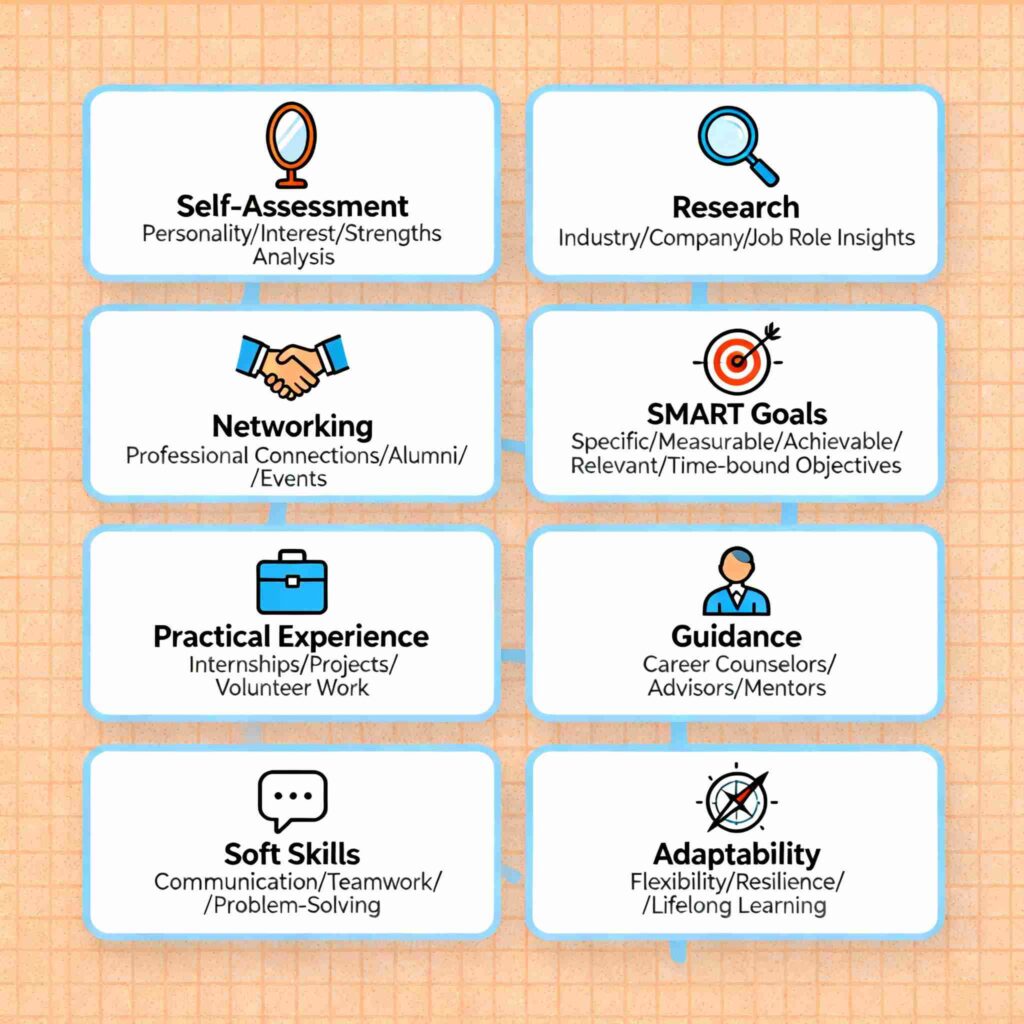
5. Practical Skills & Experience: Get Real-World Exposure
Why it matters:
Internships, part-time jobs, and volunteering are gateways to practical learning. They enhance your CV and build confidence.
What you can do:
- Seek out meaningful internships
- Attend workshops and new courses
- Join group projects and college activities
6. Seek Guidance: Expert Advice Matters
How guidance helps:
Career counselors and mentors can clarify doubts, offer industry insights, and help you map a realistic pathway.
Practical approach:
- Schedule regular meetings
- Discuss confusions openly
- Use feedback constructively
7. Build Soft Skills: Beyond Academics
Today, communication, collaboration, time management, problem-solving, and leadership are just as valuable as technical knowledge. Develop these through school activities, group projects, and public speaking opportunities.
8. Stay Open-Minded: Adapt to Change
Career journeys are rarely linear. Being flexible and ready for new opportunities is the mark of a true learner. In my experience, those who embrace change become tomorrow’s leaders.
Conclusion
Choosing a career is a gradual journey, powered by self-awareness, research, relationships, guidance, skill development, and adaptability. Remember—”There are many roads, but those who work with purpose and direction create lasting impact.”
We believe in sharing practical and inspirational tips that empower your journey. If you found this article useful, share it with friends and family, and feel free to leave comments or questions below.


