


This article brings together practical classroom strategies, psychological insights, and digital innovations to help students fall in love with reading again.
In a world full of reels, notifications, and endless scrolling, many students have quietly drifted away from books. Yet every educator knows that deep learning, imagination, and critical thinking truly grow through reading. When students enjoy reading, their language, concentration, and creativity automatically become stronger.
Across India, surveys have shown that many students read mainly for exams, not for pleasure, and that mobile distractions are weakening the reading culture among children and youth. At the same time, initiatives like NIPUN Bharat are reminding us that foundational literacy is a national priority. The good news is that with the right strategies, we can help students fall in love with reading again.
Here are 5 powerful, classroom-tested ways to rebuild reading habits among students.
1. Transform Reading into a Social and Emotional Experience
Reading becomes more meaningful when it is shared. Instead of treating reading as a silent, individual task, turn it into a social and emotional experience.
- Create book circles where small groups of students read the same story or chapter and then discuss their favourite characters, lines, or lessons.
- Use reading buddies – pair older students with younger ones so they can read together, share experiences, and recommend books to each other.
- Hold a weekly “Reading Friday” where students read aloud short excerpts that inspired or moved them.
Indian studies on reading habits have found that many school and college students feel more motivated to read when teachers use library periods, book clubs, and group activities around reading rather than only textbook-based tasks.
When students experience reading as a space for expression and connection, they no longer see it as a boring duty.
2. Integrate Digital Tools to Make Reading Interactive
We cannot ignore screens, but we can redirect them. Instead of fighting technology, make it work for reading.
- Use reading apps and digital libraries like StoryWeaver, Google Play Books, or school-based e-libraries to give students access to age-appropriate stories in English and Indian languages.
- Encourage students to maintain digital reading journals using Google Docs or blogs, where they can note quotes, feelings, and questions.
- Combine short videos or visuals with text, especially for reluctant readers, to build initial interest.
Indian educators and organisations have observed that when digital tools are blended with print reading, students engage more and are willing to spend extra time exploring stories and informational texts.
The goal is not to replace books, but to use technology as a bridge back to books.
3. Connect Reading to Students’ Real Lives & Dreams
Students often ask, “How will this help me in real life?” If reading feels disconnected from their world, they will naturally lose interest. So, choose and present books in a way that reflects their lives, emotions, and aspirations.
- While teaching science, bring in biographies like A.P.J. Abdul Kalam’s “Wings of Fire” or stories of Indian innovators and scientists.
- During social science or value education, use real-life stories of people like Kalpana Chawla, Malala Yousafzai, or young changemakers in India.
- Organise theme-based reading weeks – for example, “Dreamers and Achievers”, “Environment Protectors”, or “Change Makers”, and include short stories, articles, and biographies around that theme.
Research on Indian students’ reading habits shows that they respond better to material that feels personally relevant, local, and inspirational, rather than only abstract or foreign content.
When a student sees their own reality, culture, or dreams reflected in a book, reading becomes personal.
4. Build Reading as a Daily Habit, Not a One-Time Activity
Reading habits grow slowly but steadily. Instead of expecting students to suddenly start reading long novels, start small and stay consistent.
- Introduce “10-minute daily reading time” in class where students can read any book of their choice – storybooks, comics, biographies, even good-quality articles.
- Gradually increase this time to 15–20 minutes as their stamina and interest grow.
- Use simple trackers or charts where students can note the titles they have read and how they felt about them.
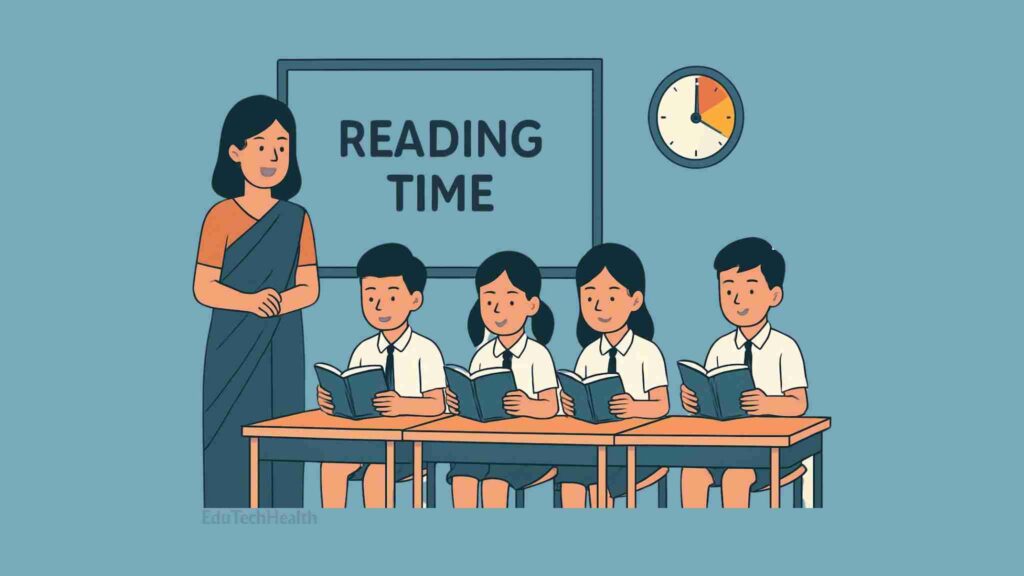
International and Indian reports on reading have repeatedly highlighted that regular, even short, reading practice leads to better vocabulary, comprehension, and academic performance over time.
It is more important that students read every day than that they read a lot in one day and then stop.
5. Encourage Reflection and Creative Expression
Students fall in love with reading when they can do something with what they read. Instead of limiting post-reading work to summaries and exam-style questions, invite reflection and creativity.
- Ask students to keep a Reader’s Journal where they write a few lines after each story: “What did I feel?”, “Which line stayed with me?”, “Which character did I relate to and why?”
- Encourage creative expression – let them draw a scene, design a book cover, act out a dialogue, or create a short reel (in a guided way) explaining what they liked in the book.
- Allow personal sharing circles where students talk about how a story changed their thinking, gave them hope, or helped them understand someone else’s feelings.
Indian surveys have indicated that many young readers are attracted to content that allows them to express themselves – whether through art, performance, or digital media – rather than just silent reading with no outlet.
Reflection transforms reading from a task into an inner journey.
The Indian Classroom as a Reading Space
India’s NIPUN Bharat Mission clearly states that every child in the country should achieve foundational literacy and numeracy by the end of Grade 3. But beyond targets and policies, the real magic happens in classrooms, libraries, and homes – when a child discovers a book that speaks to their heart.
As teachers, parents, and educators, our role is to create those moments:
- to make reading social,
- to use technology wisely,
- to connect books with real life,
- to build daily habits, and
- to nurture reflection and creativity.
When we do this consistently, students don’t just learn to read – they begin to love reading. And that love becomes the foundation for lifelong learning.
Conclusion
Helping students rediscover reading isn’t just an academic goal—it’s an emotional investment in their future. Books shape imagination, vocabulary, and values. By blending digital tools with emotional learning, teachers can rebuild a culture where reading is not a task but a joyful journey.
Encouraging reading among children today creates thinkers, dreamers, and innovators for tomorrow. Let’s make every classroom a place where stories breathe again.
References Used
- NIPUN Bharat Mission – Department of School Education & Literacy, Govt. of India. ->->
- IJCRT – “A Survey on Reading Habits of Secondary School Students”. ->->
- IJRAR – “Reading Habits of Students and their Academic Performance”. ->->
- Square Panda India – “The Reading Trend in India & How This Can Impact Children”. ->->
- Smile Foundation – “Distractions, Pressure Impact Reading Habit in Youth”. ->->
- National Literacy Trust – “Children and young people’s reading in 2024”. ->->
- Renaissance – “The magic of 15 minutes: Daily reading practice and reading growth”. ->->