


Education isn’t just about marks and modules—it’s about molding character. Teacher’s role in building character through good habits in classroom is significant. I’ve seen how small habits can shape big futures. When we guide students with patience and purpose, we help them grow into responsible, confident individuals.
Here’s how teachers can nurture good habits in the classroom:
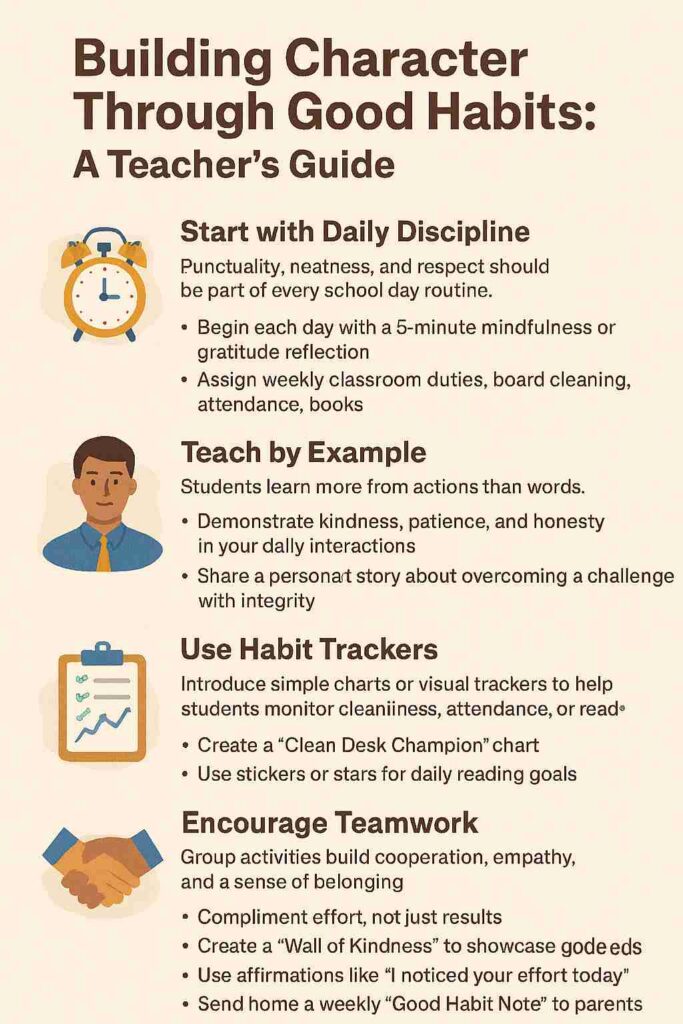
1. Start with Daily Discipline
Routine is the silent architect of character. When students follow a consistent rhythm, they begin to internalize values like punctuality and respect.
Examples:
- Begin each day with a 5-minute mindfulness or gratitude reflection.
- Assign weekly classroom duties—board cleaning, attendance, organizing books.
“Discipline is the bridge between goals and accomplishment.”
Jim Rohn
Points to Act :
- Encourage neat uniforms and tidy desks.
- Greet each student warmly to model respect.
- Use a visual schedule to reinforce time management.
2. Teach by Example
Students absorb more from what we do than what we say. We’ve found that modeling kindness and honesty creates a ripple effect.
Examples:
- Share a personal story about overcoming a challenge with integrity.
- Apologize when you make a mistake—it teaches humility.
“Children are great imitators. So give them something great to imitate.”
Anonymous
Points to Act :
- Show patience during stressful moments.
- Celebrate small wins with genuine joy.
- Use inclusive language that uplifts every child.
3. Use Habit Trackers
Visual tools make progress tangible. Use simple charts to track reading time, attendance, and even hydration!
Examples:
- Create a “Clean Desk Champion” chart.
- Use stickers or stars for daily reading goals.
“What gets measured gets improved.”
Peter Drucker
Points to Act :
- Keep trackers visible and colorful.
- Let students update their own progress.
- Celebrate milestones with certificates or shout-outs.
4. Encourage Teamwork
Group activities build empathy and cooperation. Whether it’s a science project or a classroom mural, teamwork teaches students to listen, share, and support.
Examples:
- Organize a “buddy reading” session.
- Host a classroom debate on fun topics.
“Alone we can do so little; together we can do so much.”
Helen Keller
Points to Act :
- Rotate group leaders to build confidence.
- Use collaborative games to teach problem-solving.
- Reflect together after group tasks—what went well, what could improve?
5. Reinforce Positivity
Positive reinforcement is more powerful than punishment. Always try to focus on what students do right—it builds self-worth and motivation.
Examples:
- Compliment effort, not just results.
- Create a “Wall of Kindness” to showcase good deeds.
“Catch them being good.”
Dr. Thomas Gordon
Points to Act :
- Use affirmations like “I noticed your effort today.”
- Send home a weekly “Good Habit Note” to parents.
- Celebrate progress, not perfection.
Final Thoughts
Good habits are the foundation of lifelong success. As educators, we’re not just teaching lessons—we’re shaping lives. Let’s guide our students with patience, creativity, and heart. Because when character grows, confidence follows.


